

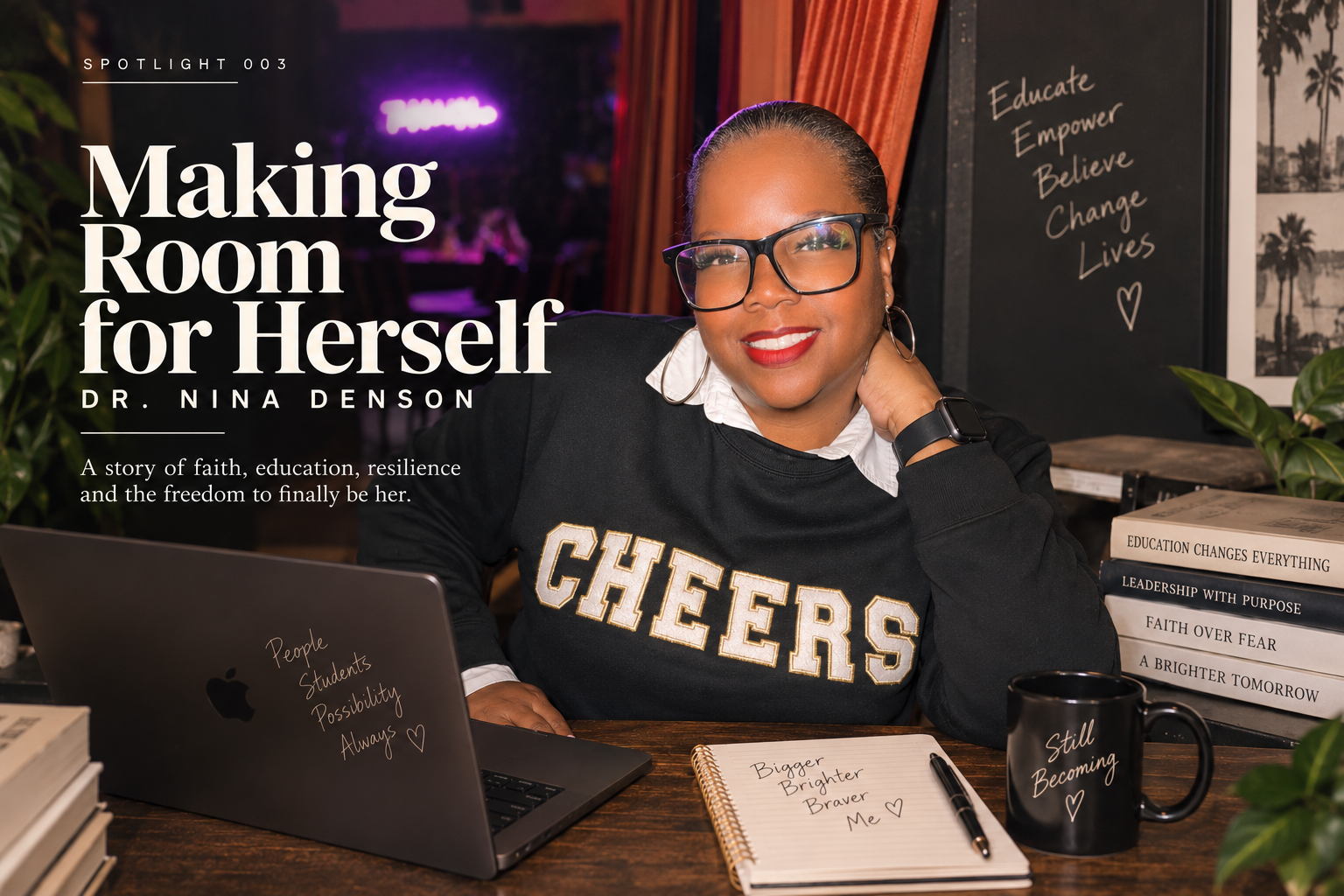
SPOTLIGHT FEATURE 003
Making Room for Herself
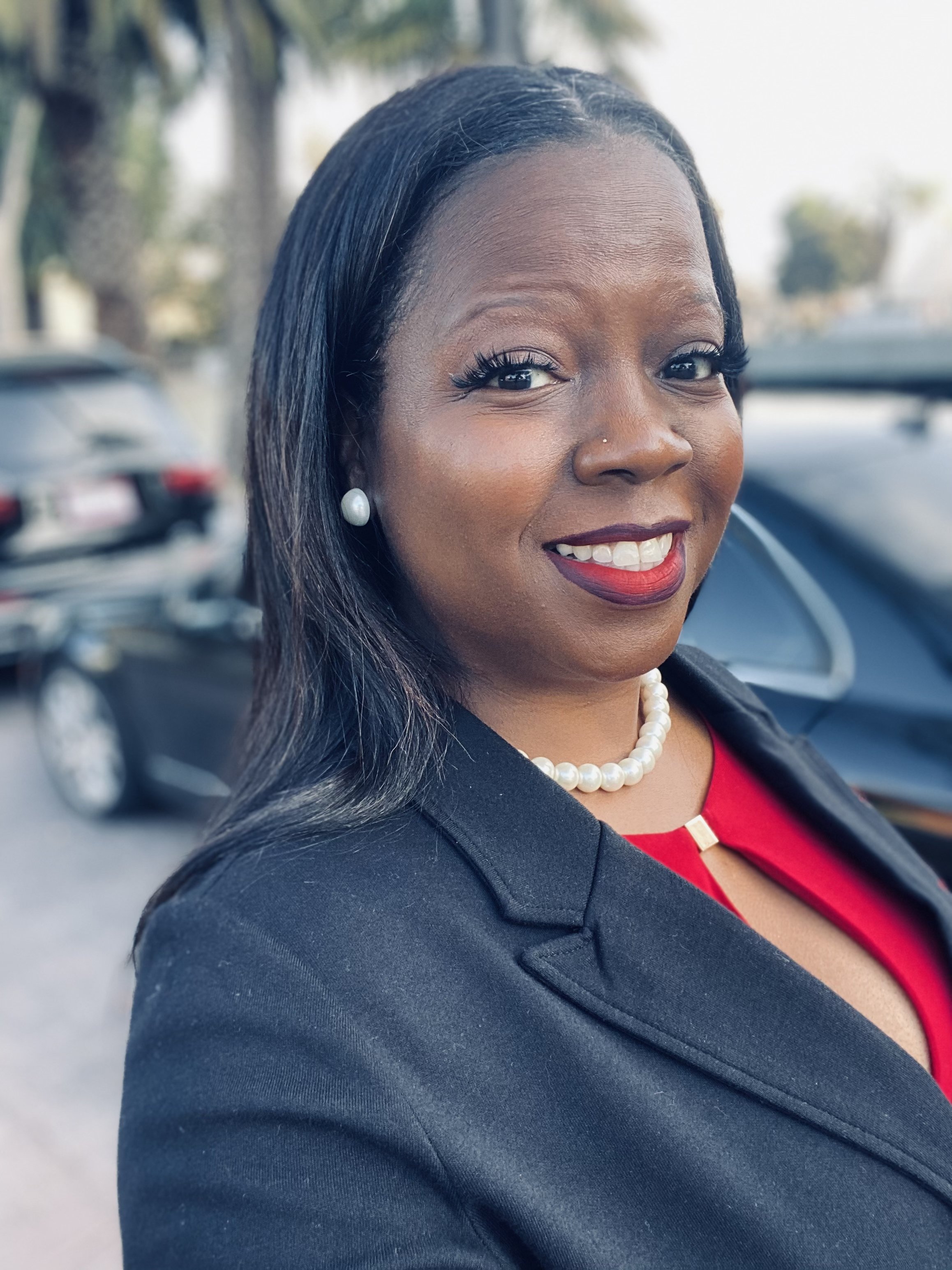
Dr. Nina Denson
What happens when a woman who has spent much of her life showing up for everyone else begins making room for herself? Dr. Nina Denson reflects on faith, education, loss, leadership, softness and the life God was charting even when she could not yet see it.
EDITOR’S NOTE
I have known Dr. Nina Denson since I was fifteen.
Long before I understood mentorship as something that could shape the way a person moves through the world, I was watching her.
I watched her faith. Her consistency. The way she showed up for people. The way she could be strong without withholding care. At an age when I needed guidance, God placed someone in my life whose example would stay with me long after I left the rooms where I first learned from her.
Years later, when I had the opportunity to work with young people myself, I found pieces of what Nina had given me showing up in the way I tried to give to them.
That is part of why this conversation belongs in September.
Inheritance does not always come through blood. Sometimes someone gives you something simply by living close enough for you to witness it.
But this story is not about what Nina gave me.
It is about Nina.
The girl who wanted greater. The educator. The daughter. The woman of faith. The woman who learned how to fight for herself and is now learning that strength can also look like softness, rest and making room for her own care.
There are people who spend so much of their lives pouring into others that we can forget to ask who they are when no one needs anything from them.
So I asked.
Mia
Where in your story do we begin?
Nina takes me back to school.
Before the doctorate. Before the years in education. Before becoming the person other people would eventually look toward for guidance.
She begins with a school-age girl being bused from South Central Los Angeles to the San Fernando Valley.
Seeing another part of Los Angeles expanded what Nina understood was possible. No one in her family had gone to college, but she began imagining a life beyond what she could see immediately around her.
“I always knew that I wanted greater. I always knew that I wanted to be the trendsetter.”
School had not always come easily. Nina remembers struggling academically when she was younger and hiding behind her sense of humor. Then, as she describes it, a light switch came on. If she wanted access to the life she had begun imagining, education would be part of how she reached it.
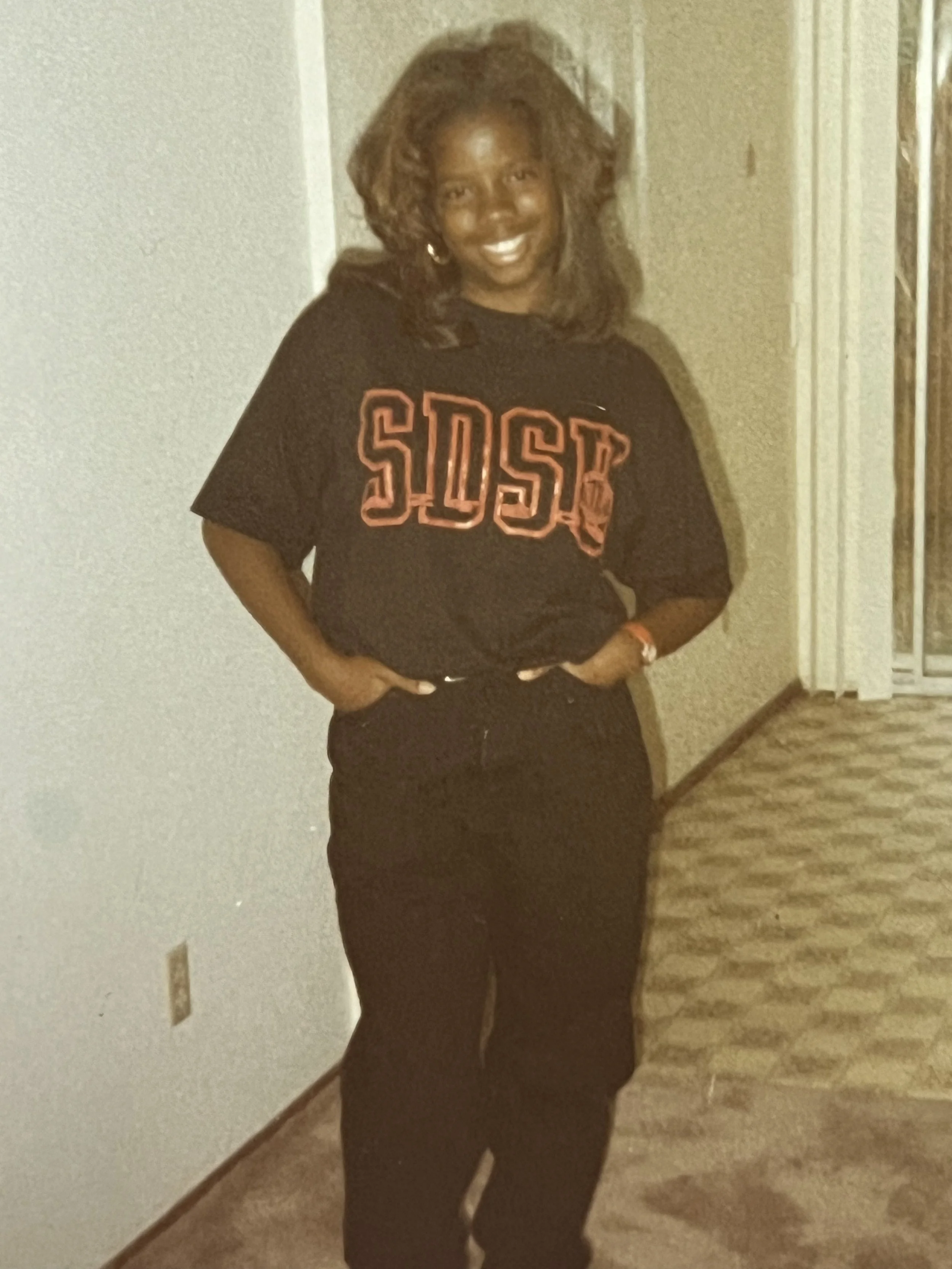
San Diego State University became the dream.
She applied to several colleges with the help of a fee waiver. Some accepted her. Some did not. Then, during a senior event, her mother and sister arrived carrying a letter.
Nina had been provisionally accepted to San Diego State through EOP.
She remembers it as the happiest day of her life.
She could not have known everything that would follow. She only knew the acceptance felt monumental.
Something had opened.
But the girl leaving for college was already carrying quite a bit with her.
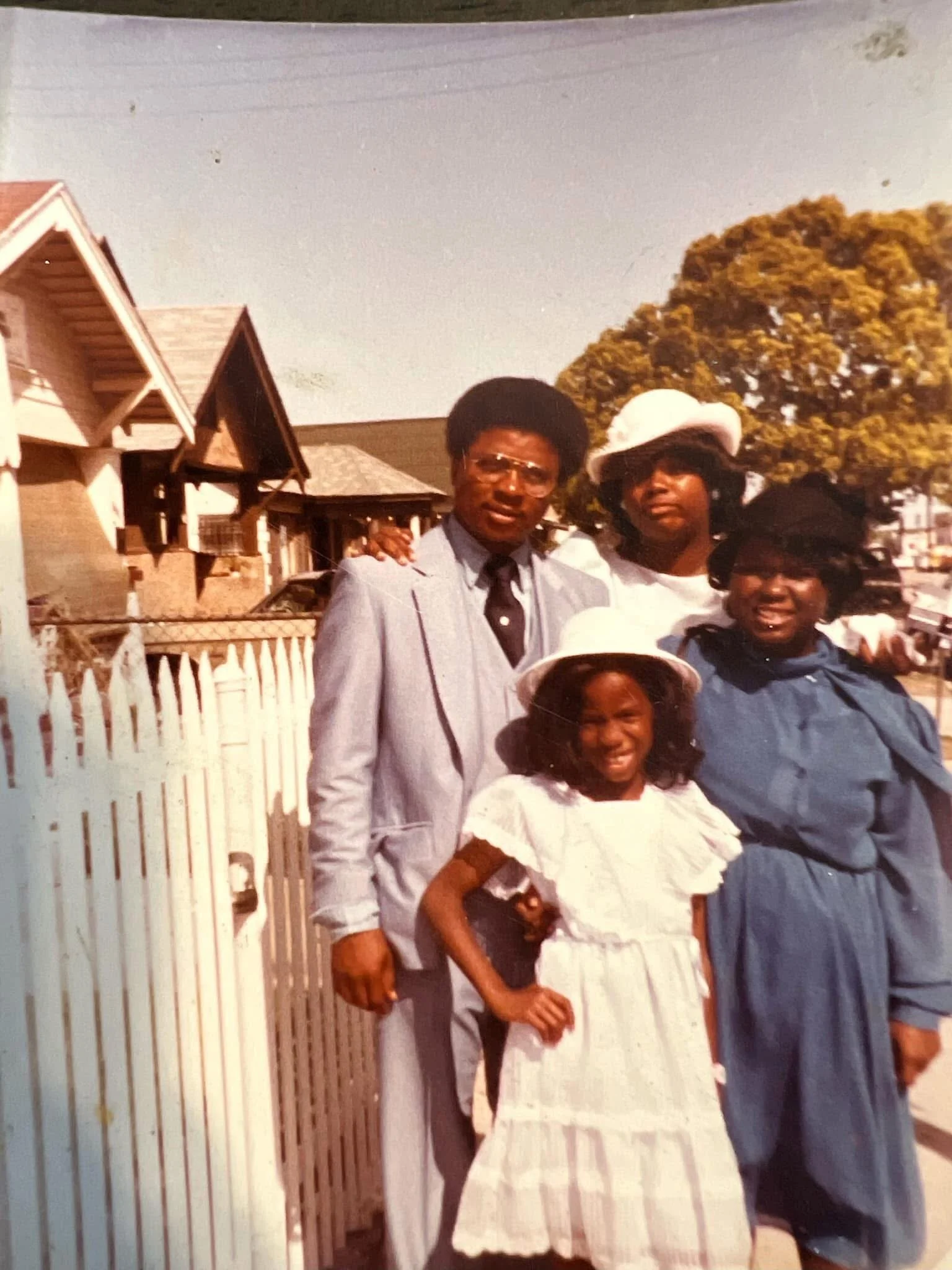
Her father was from Texas. Her mother was from Tennessee. Her parents met in high school and started their family young. Nina remembers moving often and spending time on the east side of Los Angeles. During summers, she and her sister sometimes went with their father while he cut lawns, painted houses or cleared debris.
She remembers her father struggling with alcoholism and her mother becoming deeply rooted in church. Nina herself had been in church since she was two, growing up through choir, Sunday school, youth ministry and junior ushering.
“I believe that this early foundation and relationship with God really created who I became as an adult.”
And there was family.
Kids in the streets. Skating. Kickball. Peanut butter cookies. Family anniversaries. A one-bedroom duplex that Nina remembers simply:
“It felt big. It felt home.”
There were station-wagon trips from Los Angeles to Texas or Tennessee for family reunions. Cousins were raised more like siblings.
It was not until college that Nina began comparing what she had grown up with to what other people had.
“We were poor. And I didn’t know it because we were so rich in love.”
When Nina became the first in her family to go to college, she did not treat access as something to keep for herself. She brought her younger girl cousins to visit her at school.
She wanted them to see that they could have this too.
What People Learn From Us
Nina has always had a little boss in her.
Her words, not mine.
“I’ve always been a little boss.”
She describes going to college with a confidence that could sometimes become abrasive. At the time, Nina thought she was offering constructive criticism. She did not fully understand what her delivery was teaching the people around her.
Then came heartbreak.
Nina remembers crying out to God over a relationship that did not mend. The experience left her vulnerable in a way she had not been before, and her relationship with Christ deepened.
Something in her softened.
Later, when she reconnected with college friends and heard some of her old communication style reflected back to her, Nina was startled.
“I was like, is that what I taught you?”
Then came the realization:
“People were learning from me even though I didn’t realize I was teaching class, which is funny.”
It changed how Nina thought about influence. Not just what she intended to give people, but what people actually experienced from her.
That lesson followed her into adulthood. A painful argument with family showed her that being right and preserving a relationship were not always the same thing. Nina says she won the argument, but the cost was high. Repair took years.
She began learning that power itself was not the problem.
What mattered was how she used it.
The Educator
Nina thought she would become an attorney.
Instead, she became an educator.
She taught special education for ten years before moving into administration. Her career took her through special education settings, juvenile court schools, continuation schools and eventually elementary education.
At Los Padrinos Juvenile Hall, where she served as an assistant principal, Nina worked with students around responsibility, recidivism, bullying and ownership of their education.
She also paid attention to teachers. She sat with them. Co-taught with them. Encouraged them. Tried to understand what they needed.
She wanted to be the administrator she had needed when she was a teacher.
While Nina was at Los Padrinos, her grandmother died.
The loss led Nina toward another decision. She would pursue her doctorate in her grandmother’s honor.
She applied to the University of Southern California and was accepted. Her doctoral research focused on outperforming nontraditional urban school settings, including parent involvement, school structures and students taking greater ownership of their educational experiences.
Her career continued moving.
Sometimes forward.
Sometimes sideways.
Sometimes somewhere Nina did not understand until much later.
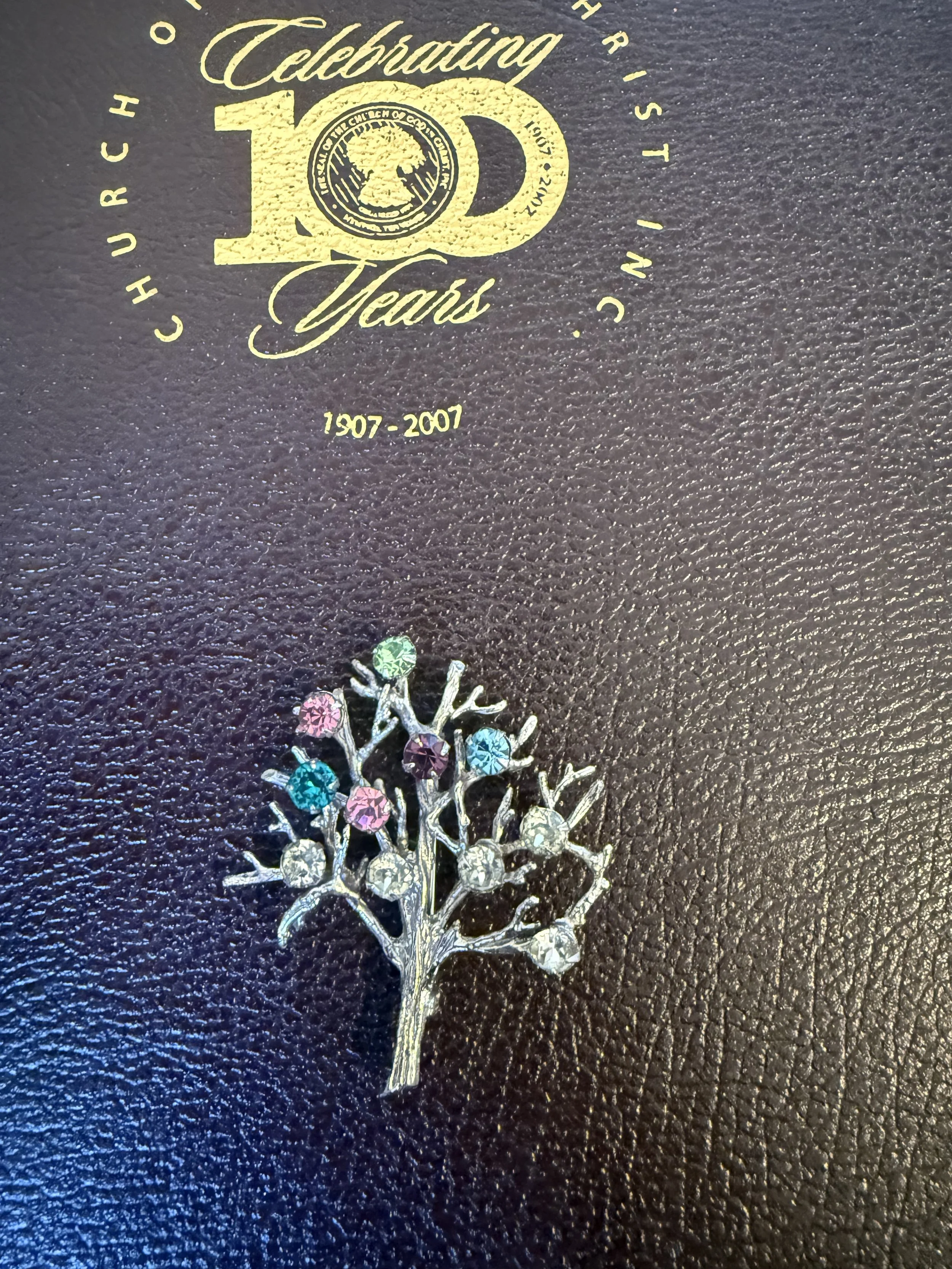
A Mother’s Pin bearing the birthstones of Nina’s grandmother’s grandchildren, resting on a Church of God in Christ centennial Bible representing more than 100 ye ars of ministry. From the personal archive of Dr. Denson.
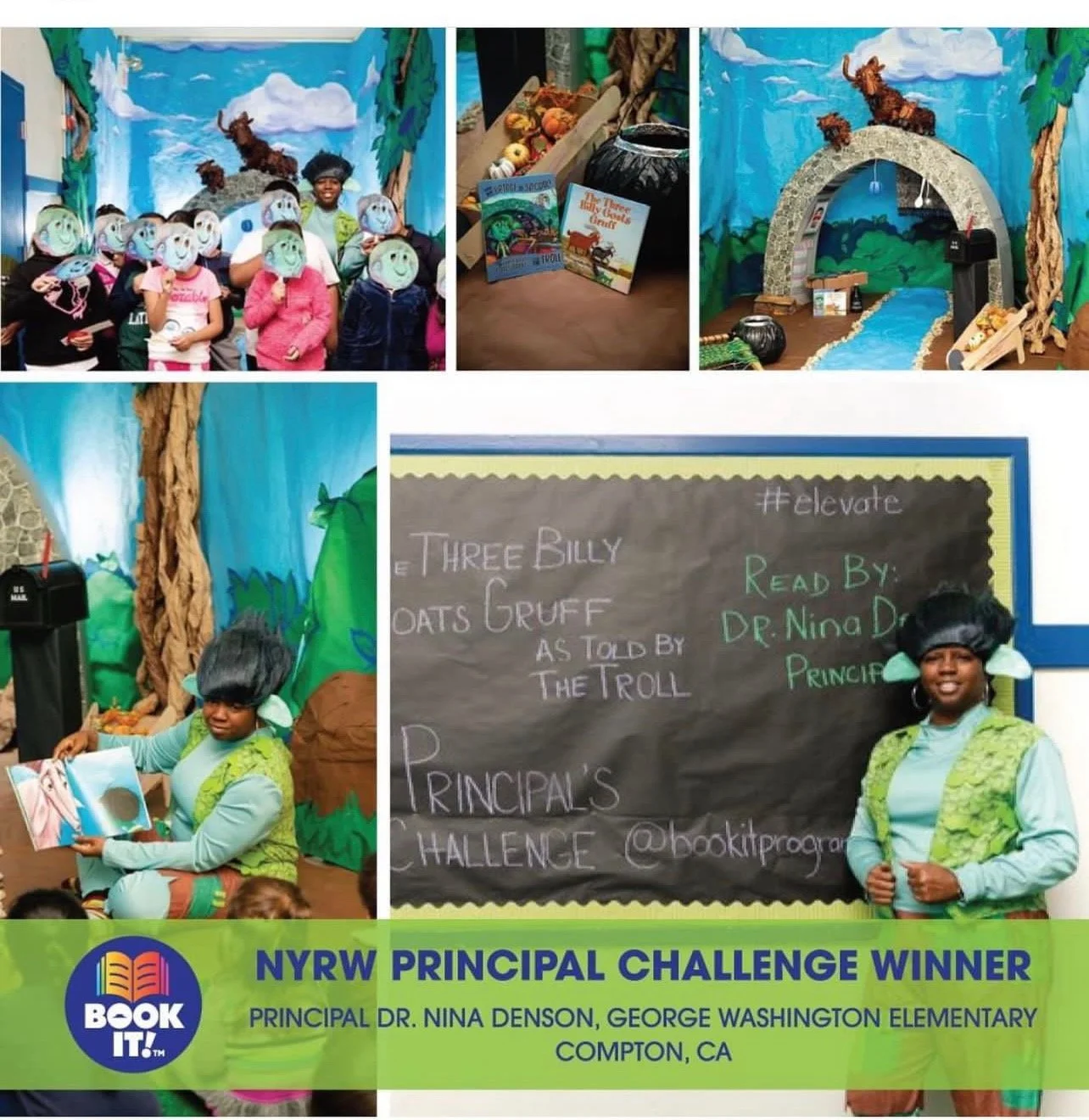
After a difficult principalship at a continuation school, another opportunity eventually brought her to Washington Elementary in Compton.
By then, Nina had spent years working with older students. She had seen the gaps that could exist by the time young people reached high school, continuation school or the juvenile court system.
Elementary school allowed her to reach students earlier.
“I was like, where had elementary been all my life? This is so beautiful. Look at these kids.”
Nina spent three years there. She remembers test scores improving, morale improving and staff attendance improving.
“I live by the standard that if I expect it then I want to also project it.”
Then she received word that she was being reassigned to the special education department.
She was heartbroken.
But Nina says God had already told her it would be her last year there.
She just had not understood what He meant.
The Time She Did Not Know She Would Need
What followed felt like a professional unraveling.
Nina eventually learned she would be moved from administration back into a special education classroom.
For someone who had built a career around education and leadership, the change was devastating.
Then her father became sick with pancreatic cancer.
Suddenly, the interruption in Nina’s professional life created something she could not have anticipated.
Time.
Every other day, she traveled from Norwalk to Lancaster to sit beside her father in the hospital. She made sure he was comfortable, safe and receiving the treatment he needed.
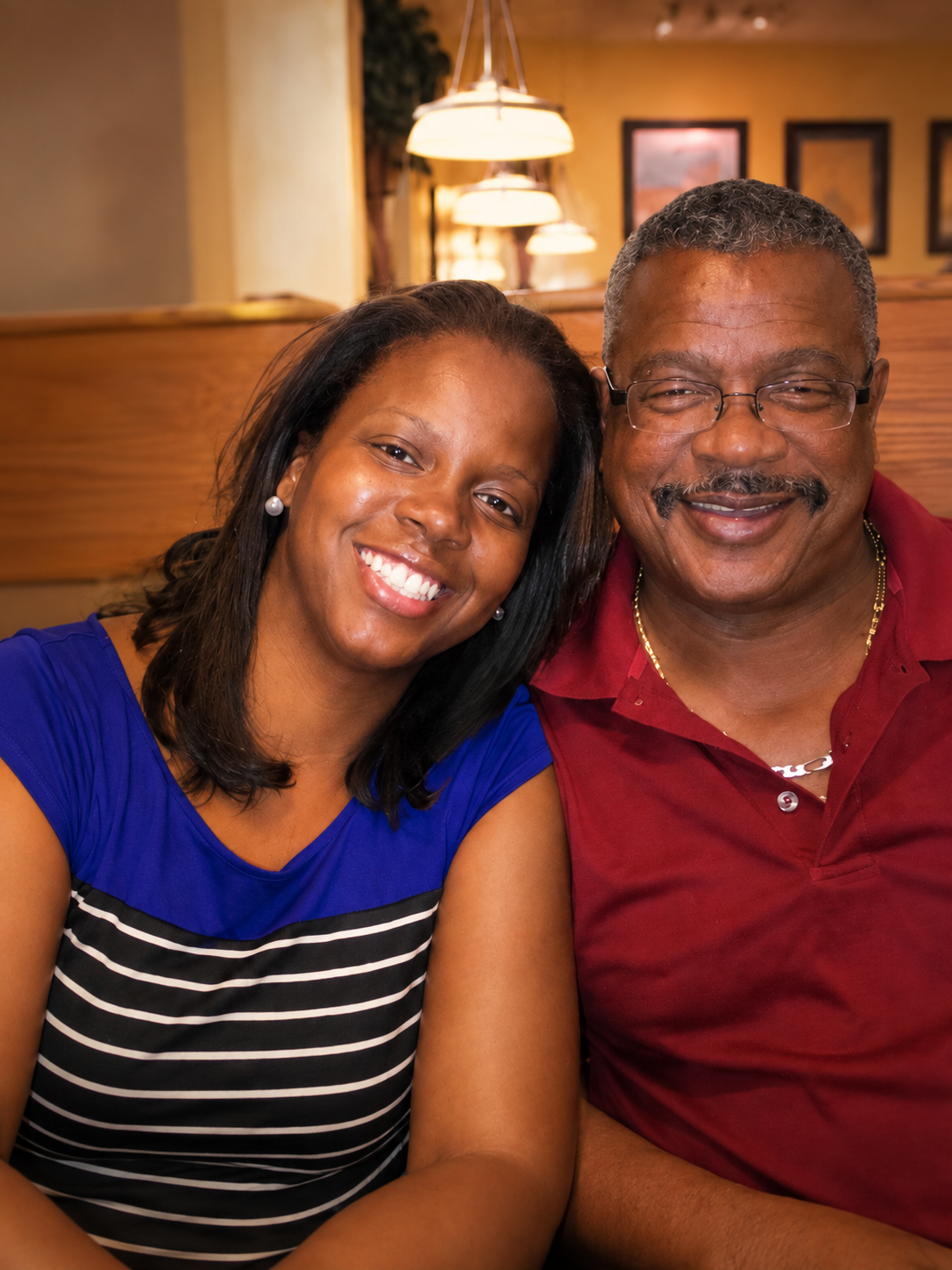
“God put me in a position where I felt comfortable enough to be in the toughest season I thought of my life without feeling guilty.”
There is a difference between believing God is directing your life while you are moving toward something you want and believing it when the path appears to be moving backward.
Nina had to live inside that difference.
She could not have known when her professional life shifted that her father would become sick. She could not have known how much those drives to Lancaster would matter.
What felt like it had taken something from her had also given her the freedom to be somewhere she could never get back to later.
And Nina knows herself.
Had she still been a principal, she knows exactly what she would have been thinking.
“Not me, not Dr. Denson. It’s WOW Wednesday coming up. Our kids are testing.”
There would always have been something at school.
Something requiring her presence.
Someone needing her.
Instead, during one of the hardest periods of her life, Nina could simply be a daughter.
Her father died.
And Nina returned to work.
She consulted. Briefly returned to the classroom. Filled in for administrators. Kept moving.
Because moving was something she knew how to do.
Grieving was different.
Strength Does Not Always Have to Fight
Long before Nina was navigating difficult workplaces, she had learned how to defend herself.
As a little girl, she wanted a big brother.
She was skinny. She got picked on. She wanted someone who could stand up for her and fight for her.
So Nina learned to fight for herself.
Over time, she says, that created a hard exterior. She stayed prepared for battle.
Years later, during one of the most public and difficult seasons of her career, that instinct would be tested.
While Nina was serving as a principal in San Gabriel, an active-shooter drill became the subject of complaints and later news coverage. Nina says her actions were intended to assess whether classrooms were properly secured and whether students and staff would be safe during an actual emergency. She says she was placed on administrative leave before being given an opportunity to explain what happened from her perspective.
Nina also believes being a Black woman shaped how she was perceived and treated during that experience.
She had spent more than two decades building a career in education.
Now she felt reduced.
Everything she had learned about survival could have told her to fight.
Instead, Nina says God told her:
“Be quiet. I got you.”
“In that moment, I learned that I did not have to fight for myself.”
Nina began looking differently at the toughness she had spent years developing.
It had protected her.
It had also followed her into places where protection was no longer what she needed.
She began learning to rest.
To soften.
To trust.
Eventually, she could see another layer in what that professional season had given her.
Nina had gone almost immediately back to work after her father died.
“I didn’t have a time to just really sit, heal and reflect.”
Being away from work finally made stillness unavoidable.
“I literally got an opportunity to pour back into myself, to restore myself because I was hurting.”
She would never have chosen the circumstances that created that time.
But she knows what happened inside it.
“I needed that season of my life because God restored me 100-fold.”
Making Room for Herself
I ask Nina who she is when she is not being what someone else needs her to be.
She tells me the question is right on time.
Nina had recently decided to leave a relationship after years of pouring into her partner and his children.
When she began taking stock of herself, she realized something.
“I had forgotten me.”
The sentence is small compared with everything that comes before it.
But it changes the story.
Nina knows how to show up.
For family. Students. Educators. Partners. Friends. Young people. Communities.
She has been doing it for most of her life.
Now she is learning what it means to show up for Nina. To show up for herself with the same love, care and intention she has so freely given to everyone else.
She is learning that she, too, deserves the Nina everyone else has been able to experience.

“Being cared for well is about being considered. It’s about being seen. It’s about being heard, valued, appreciated.”
Sometimes that means quiet.
She can drive to San Diego in complete silence just to have room for her thoughts.
Sometimes it is walking. Music. Working out. A massage.
And sometimes a gospel song gives her enough room to worship, thank God and come back to herself.
“I think that reset is necessary, and when we’re resetting we have to remember what we’re resetting to.”
Nina is not describing becoming someone new.
She is describing returning.
To the woman underneath all the roles.
Making room for herself does not mean she stops loving or serving other people.
It means Nina belongs among the people she considers too.
That becomes clearer when we talk about care.
When Nina was younger, care was easier to see in things. Treats from her parents. Christmas gifts. School shopping. Later, gift giving became one of the ways she understood love.
Her definition is different now.
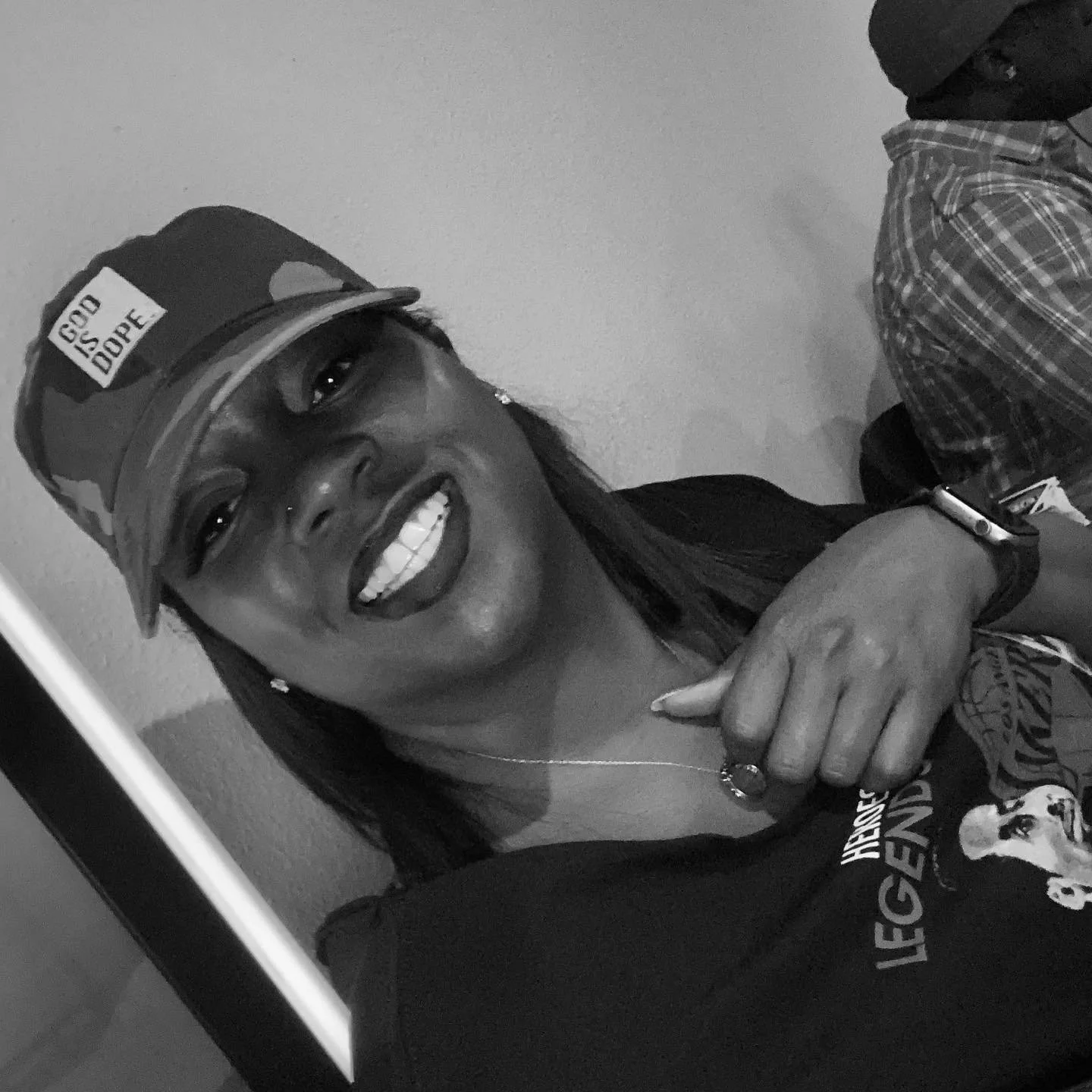
Care is presence now.
It is being vulnerable without fearing that vulnerability will later be used against her.
It is knowing someone has considered you before you have to ask.
For a woman whose story contains so much giving, being considered may be one of the simplest ways of making room.
What She Carries
When I ask Nina what she has intentionally chosen to carry forward, education comes first.
Then God.
“I’m intentionally carrying forward the importance of education. I’m intentionally carrying forward that God doesn’t make any mistakes.”
She wants to continue breaking barriers beyond what society imagined she could accomplish as a Black woman and now a Black doctor.
But I also ask what ends with her.
Nina names doubt.
The box.
The expectation that she must become whatever this season tells her a woman like her is supposed to be.
She wants to be her own person, to set her own traditions, and to keep loving herself out loud, even if the world does not accept everything she has to offer.
Some things Nina inherited became foundations.
Others she had to unlearn.
And some of what she carries now will become inheritance for someone else.
Because long before Nina understood the reach of her own life, people were already learning from it.
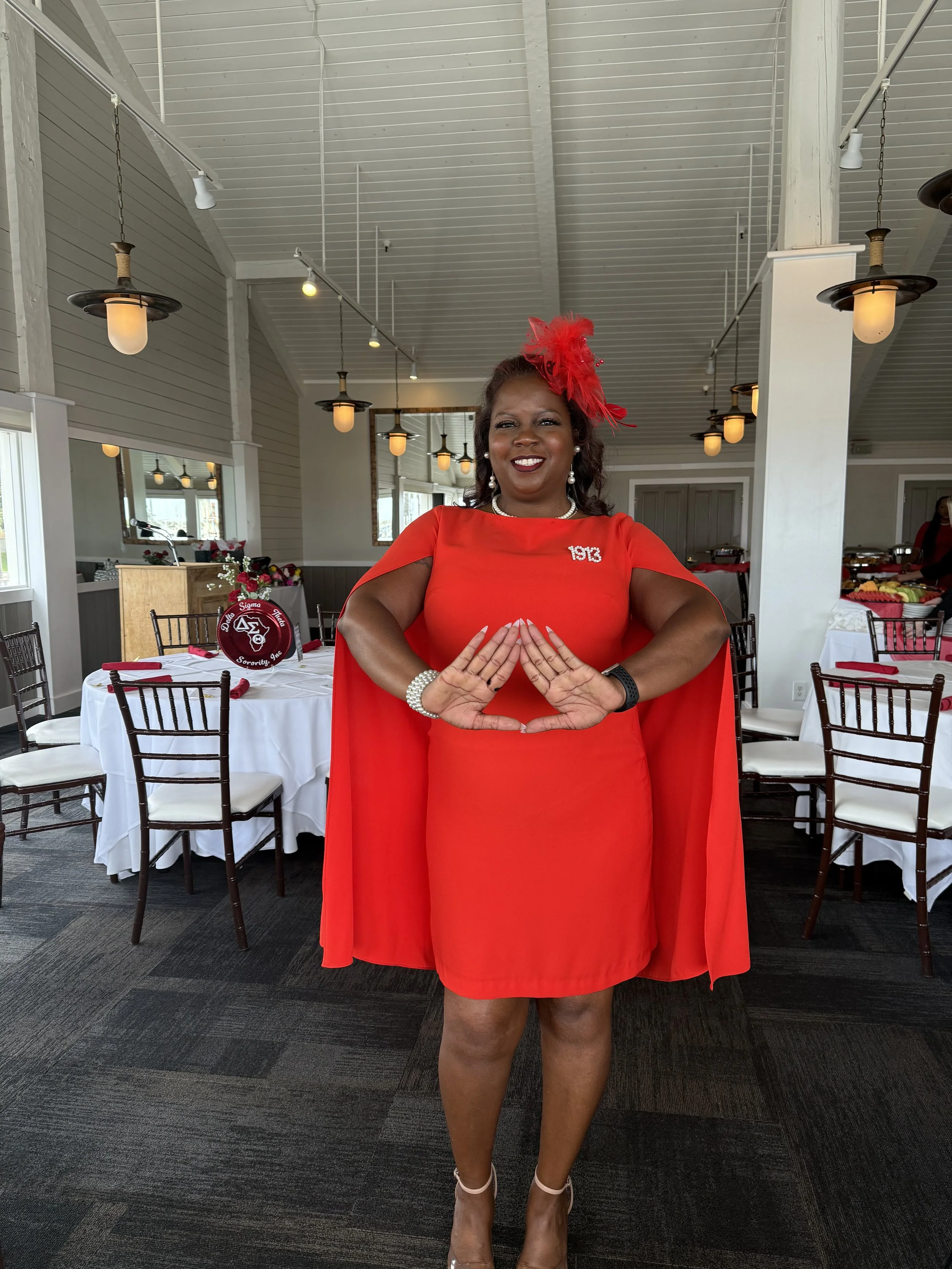
What part of the story can only be told by you?
This question slows Nina down.
She returns to San Diego State.
To the girl who knew that if she made it there, she had to finish.
She had planned to become an attorney.
God, she says, had another plan.
She became an educator.
Then came special education. Administration. Los Padrinos. USC. Washington.
Then came the seasons that asked something different of her.
Caring for her father.
Losing him.
San Gabriel.
The unexpected time to finally sit, heal and reflect.
There were doors Nina walked through deliberately and doors that closed without her permission. There were seasons she understood while living them and others whose meaning only became clear later.
Looking back, Nina sees something connecting them.
“Sometimes God is showing you that I’m charting your life. I’m teaching. I’m already setting the path before you.”
The girl at the beginning of this story knew she wanted greater.
She could not have known what greater would look like.
That it would include becoming the first in her family to go to college. Becoming Dr. Denson. Building a life in education. Losing people she loved. Having parts of the life she built disrupted. Learning that strength did not always require a fight.
Or realizing, after years of making room for everyone else, that there needed to be room for Nina too.
At the beginning, Nina knew she wanted greater.
Now she understands that greater was never only about what she would accomplish or where the path would take her.
It was also about becoming someone who could finally make room for herself.
“In spite of the choices that you make, he is still going to ensure that you meet the destiny that he has set for you.”
EDITOR’S POSTSCRIPT
Big,
Before I had language for what you were giving me, I was watching.
Your faith. Your consistency. The way you poured into people. Years later, when I had the opportunity to pour into young people myself, some of what I carried into those rooms had first been modeled for me by you.
That is inheritance too.
Sometimes what someone gives us travels farther than they ever get to see.
So the greatest way I know to honor what you gave me is not simply to thank you for it.
It is to carry it well.
And I will.
Mia
ABOUT DR. NINA DENSON
Dr. Nina Denson is an educator, leader and woman of faith with 22 years of experience serving children, families and communities. Her career has spanned special education, juvenile halls and camps, educational leadership and workforce development. She currently serves as Program Director of the Youth Mental Health Academy at the Child Mind Institute, creating pathways for young people to explore careers in mental and behavioral health. Grounded in a relationship with Christ that began in childhood, Dr. Denson approaches education, leadership and service as Kingdom work, using each opportunity to strengthen communities and create possibilities for the next generation.
The Soundtrack
Making Room for Herself Playlist
Every Spotlight includes a playlist curated by the featured guest.
Nina’s collection offers another way to meet the woman behind the story, through the songs she actually listens to.
Rather than asking every selection to explain her journey, we invite you to simply press play and experience the music as she does, one song at a time.
What We Carry
Personal archive, submitted by Dr. Nina Denson
A Mother’s Pin bearing the birthstones of Nina’s grandmother’s grandchildren, resting on a Church of God in Christ centennial Bible.
Faith and family sit together in this image. The Mother’s Pin holds one generation in its birthstones, while the Bible commemorates 100 years of ministry. Together, they offer a tangible reflection of the foundations Nina carries forward: family, faith, and what one generation leaves with the next.
The Coffee Table
Artifact 003