

THE LIVING ROOM MEDIA OCTOBER 2026 SPOTLIGHT 004
The Things You Don’t See
Photographer Mikeisha Tresevant on the conversations that changed her life, the people who shaped it, and everything that happens when nobody’s watching.
Editor’s Note
Mikeisha Tresevant has spent more than a decade photographing people, preserving moments they may otherwise have forgotten.
But I was curious about the woman whose eye has captured so many other people's lives. What does she remember? Which conversations stayed with her? And what might we discover if, for once, she wasn't the one behind the camera?
I asked Mikeisha where she wanted us to enter her story.
Her answer was considerably earlier than I expected.
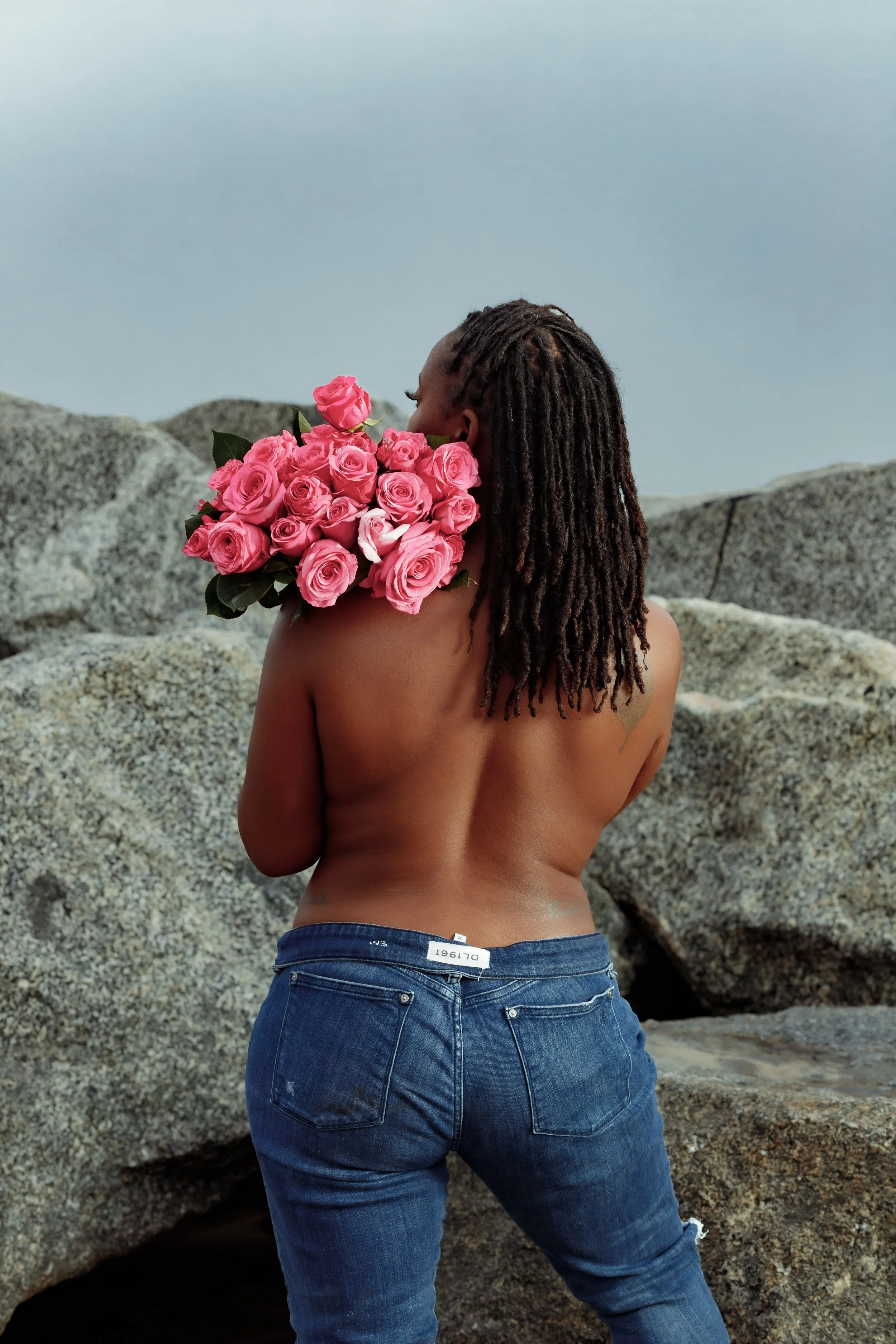
Before she had fingernails.
That's where Mikeisha Tresevant wants to begin her story.
Conception, to be exact.
Her mother hadn't believed pregnancy was possible after a sexual encounter that stopped short of intercourse. Neither had the man who would become Mikeisha's biological father. As far as they understood it, there was no reason to expect a baby.
And yet.
"Like God just needed contact for the earthly world to drop me into existence," Mikeisha says.
She finds the circumstances hilarious, although they've also given her something to think about.
"My purpose in life is truly bigger than me."
She's since become considerably more cautious about the possibility of an unplanned pregnancy. She jokes that she'd like to reserve the right to choose the father of her future children.
Mikeisha grew up in Los Angeles, where some of her earliest memories of photography have nothing to do with holding a camera.
They begin with her grandmother's photo albums.
There were dozens of them. During holidays, the family would gather around the photographs, laughing while her grandmother supplied the stories behind each picture.
"She, being the historian of the family, loved taking pictures, and we loved hearing about the moment that made the memory."
Later, Mikeisha watched Love Jones and saw a Black woman making a life as a photographer. At Crenshaw High School, she enrolled in an analog photography class, learning to develop film in a darkroom.
She mostly photographed clouds.
"In a funny way, that makes sense to me, to be looking up in wonder."
At Crenshaw, Mikeisha was also a cheerleader, participated in the New Media Academy, had teachers she adored, friendships she was building, and what she remembers as the sweetest new relationship.
She was, as she puts it, "in my high school bag."
Then came the announcement.
"We're moving!"
Following a family tragedy, her mother decided they would leave Los Angeles for Lancaster.
"I felt like I was losing EVERYTHING."
The new school was predominantly white. After making every cheer and dance team she'd previously auditioned for, Mikeisha didn't make the team there.
For approximately six months, she struggled with depression.
"I checked out… was completely numb."
The following year, Crenshaw lost its accreditation. Friends transferred, while others worried about their chances of getting into college.
Mikeisha began to see her mother's decision differently.
Lancaster eventually introduced her to new friendships and a deeper involvement in church.
"I lost the old version of me, and then felt like I was gaining a newer version."
But another conversation was waiting before college.
Her mother sat her down and explained that the man Mikeisha had grown up believing was her father might not be her biological father. Questions had arisen because Mikeisha's physical features differed from those of her sisters.
She had grown up as what she calls "the neighborhood's love child."
Now she was leaving home with questions about another possible father, another sister, and what the discovery might mean for her identity.
She describes the search as an additional assignment in growing up.
College brought new friendships, new ambitions, and plenty of photographs.
Mikeisha and her best friend Brittney, affectionately known as Little Britt, became the resident photographers.
"I took pictures of EVERYTHING," she says. "Alllllllll the bad photos… I have them, lol."
She also established a dance team larger than any in the school's history.
And she fell in love.
When that relationship ended, she was devastated. Her grades suffered, and the heartbreak affected an entire academic year.
"The only place I could comfortably cry was class."
She'd worked hard enough academically that her grades could withstand the setback, but there was no shortcut through the grief.
Mikeisha would fall in love again over the years. And again.
Eventually, she says, "the only person I needed to fall in love with was me."
Before her twenty-seventh birthday, Mikeisha moved into her first apartment on her own.
She calls it her first big-girl apartment.
About six months after moving in, she hosted a party with her fraternity brother, who lived downstairs.
Mikeisha was responsible for the food and drinks upstairs. He handled the games, music, and entertainment below.
Among the guests was one of his younger fraternity brothers.
The two began talking.
When I ask Mikeisha which conversation changed the way she understood herself, this is the one she remembers.
"I feel like I had an encounter with an angel."
It wasn't a romantic encounter.
"Not a romantic one… it was an intellectual one… one with depth."
They talked about business, passion, art, creativity, and the ways people suffer when they aren't pursuing their dreams.
There was alcohol involved, which Mikeisha readily acknowledges.
"You know alcohol heightens everything."
They talked until sunrise, eventually falling asleep in the living room.
She can't recall every detail of what was said. She does remember the conviction she left with.
"I left that conversation with the obligation to follow every single dream I have and pursue like no other."
She never saw the man again.
He wasn't in any photographs from the party. Whenever she asked the people who'd attended about him, nobody remembered or could identify him.
"An angel encounter, I call it," she says.
"He was exactly what I needed when I needed it."